
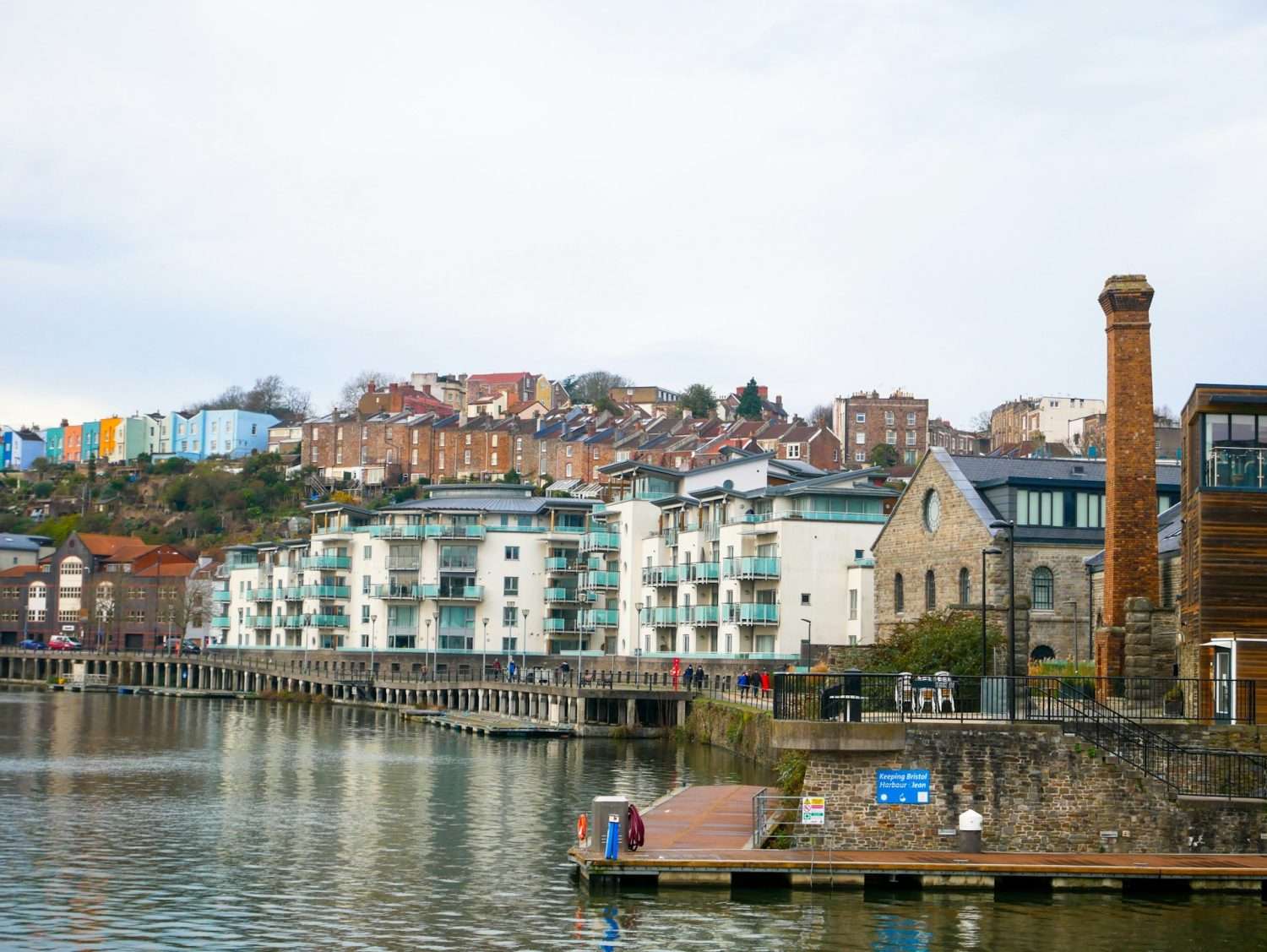
Living in BS1 places much of central Bristol within walking distance, including parts of the Old City, harbourside, Broadmead and Redcliffe. The postcode may suit buyers who prioritise a central location, city-centre services and apartment living, but the experience varies considerably between streets and buildings.
Bristol Temple Meads can be reached on foot from some BS1 addresses. Properties may also be close to shops, workplaces, restaurants, cultural venues and routes around the Floating Harbour. Distance, accessibility, noise and surrounding activity depend on the precise location.
A converted waterfront apartment may feel very different from a modern home in Redcliffe or a property close to Broadmead. Buyers should therefore consider the building, immediate street and ongoing ownership costs rather than relying on the postcode alone.
Areas within BS1
BS1 covers much of central Bristol, but it does not correspond with one neighbourhood or council ward. Commonly used area names do not always follow postcode boundaries, so these descriptions provide a broad guide.
The Old City contains historic streets, older buildings, independent businesses and a mixture of daytime and evening activity. Homes close to restaurants, pubs and late-opening premises may experience more footfall, deliveries and noise.
The harbourside combines waterfront walking routes, cultural attractions, apartments and converted commercial buildings. Properties differ in age, outlook and management arrangements. Flood information and plans for nearby sites may be relevant when considering a home close to the water.
Redcliffe contains older buildings, modern apartments and converted properties. Bristol Temple Meads can be reached on foot from some streets, although the distance and route vary by address.
Broadmead is a major city-centre shopping area close to Castle Park and a number of bus routes. Bristol City Council’s City Centre Regeneration information explains how its Development and Delivery Plan covers Broadmead, Castle Park and the Old City.
The plan addresses future homes, public spaces, transport connections and a wider mixture of city-centre uses. Individual proposals may progress at different rates, so the plan should not be treated as a fixed construction timetable.
Queen Square and the surrounding streets sit between the Old City and harbourside. Historic architecture shapes the area, and some properties may have listed status or sit within a conservation area.
What is living in BS1 like?
Living in BS1 can reduce the need to travel into the centre for work, shopping or leisure. Many workplaces, shops, restaurants, entertainment venues and waterside routes can be reached on foot from parts of the postcode.
The character changes over short distances. Shopping streets lead towards historic squares, waterfront paths and residential developments within converted buildings. This variety means that a description of BS1 as a whole cannot predict the experience of an individual home.
Commuters, deliveries and commercial services contribute to weekday activity. Weekends, public events and seasonal visitors may increase footfall around the Old City and harbourside. Viewing a street at different times can provide a broader impression of activity, lighting and noise.
Commercial premises may affect nearby homes depending on their use, opening hours and servicing arrangements. Deliveries, refuse storage, extraction systems and licensing conditions may influence noise, smells or access. A shop that closes early may have a different effect from a restaurant or late-opening venue.
People planning to work from home may also want to assess broadband availability, mobile reception and sound insulation. Noise can come from the street, neighbouring apartments, communal corridors, lifts or nearby businesses.
Shops, leisure and open space
BS1 provides access to Broadmead, Cabot Circus, the Old City and the harbourside. Across these areas, the city centre includes major retailers, independent shops, markets, restaurants, cafés, pubs and entertainment venues.
Everyday services can be just as relevant when comparing addresses. The distance to food shops, pharmacies, parcel collection points and recycling facilities may affect regular routines more than nearby visitor attractions.
Castle Park provides a central green space between Broadmead and the Old City. Queen Square offers an open area close to the waterfront, while the harbourside provides walking routes through the centre.
Current details about public green spaces are available through Bristol City Council’s parks and open spaces service.
Some apartments include balconies, terraces or communal courtyards. A solicitor or conveyancer can establish how the lease describes these spaces, who maintains them and which restrictions apply.
People seeking a conventional private garden or easy access to larger green spaces may wish to compare neighbourhoods outside BS1.
Transport and everyday journeys
The convenience of Bristol Temple Meads depends on the property’s location. Parts of Redcliffe and the eastern city centre are closer to the station than addresses towards the western harbourside.
Walking the actual route can reveal gradients, cobbled surfaces, busy junctions and road crossings that may not be apparent from a straight-line distance. Accessibility also differs between buildings. Entrances, internal steps, lifts and routes through communal areas can affect everyday journeys.
Bus services operate through and around the centre, although stops and routes may change during construction work. Bristol City Council’s transport corridor programme includes Broadmead, Bedminster Bridges, Redcliffe Way, Bond Street and Temple Way. The council describes the programme as supporting bus travel, walking, wheeling and cycling.
Cycle storage differs between developments. A lease or set of management rules may restrict bicycles in communal corridors, apartments or on balconies. Storage arrangements therefore need to be established for the individual building.
Property available in BS1
BS1 offers purpose-built apartments, converted warehouses and offices, homes above commercial premises, newer developments and properties within listed or historic buildings. Townhouses, mews-style homes and other houses may also become available, although current listings provide the clearest picture of the market at any given time.
Newer developments may include lifts, parking, cycle storage, reception services or communal outside space. These facilities can contribute to the annual service charge.
Converted buildings may offer high ceilings, exposed brickwork and less conventional layouts. They can also have older windows, unusual room shapes and different levels of sound insulation.
The position of a home within a building can affect noise, natural light, outlook and access. Proximity to lifts, bin stores, entrances, commercial units and neighbouring apartments may influence the experience of living there.
How much does property cost in BS1?
There is no single price that accurately represents every BS1 property. The postcode contains different types of apartments, conversions and houses, while individual buildings have their own lease terms, facilities and service charges.
Floor level, condition, lease length, outside space, parking and included facilities can all affect how two properties compare. Homes within the same development may have different asking prices and ongoing ownership costs.
Housing figures last checked: September 2026.
For wider context, the Office for National Statistics estimated the average Bristol house price at £357,000 in June 2026, based on provisional data. This was 3.5% higher than in June 2025. The estimated average paid by first-time buyers was £317,000.
These figures cover the whole Bristol local authority area and all property types. They are not BS1 averages and should not be used as a valuation for an individual home.
The same ONS release estimated the average private rent across Bristol at £1,880 a month in July 2026, compared with £1,765 in July 2025. This is also a city-wide estimate rather than a figure for BS1.
Completed sales within the same building or on nearby streets may provide comparison context, but they do not establish the value of another property. The HM Land Registry UK House Price Index provides official longer-term price trends. Local estimates can fluctuate when relatively few transactions have completed.
Purchase price is only one part of the total cost. Service charges, any ground rent, Council Tax, parking and proposed building work may affect monthly expenditure.
The current Council Tax band can be found through the GOV.UK Council Tax service. The amount payable will depend on the band, financial year and occupier’s circumstances.
Leasehold ownership and service charges
Many central Bristol apartments are sold on a leasehold basis. Points for a solicitor or conveyancer to investigate may include:
- The remaining lease term
- Current service charges and previous increases
- Any ground-rent provisions
- Proposed work and available reserve funds
- Building-insurance arrangements
- Fire-risk and building-safety records
- Rules concerning pets, subletting and alterations
Where available, recent service-charge accounts, budgets and management records may provide information about previous costs, proposed work and questions raised about expenditure.
Developments containing shops, restaurants or offices may divide costs between residential and commercial occupiers. A solicitor or conveyancer can establish what the lease and management information say about these arrangements.
Parking may attract a separate charge. Lifts, controlled entrances and other shared equipment may also create repair or replacement costs over time.
Parking and the Clean Air Zone
Private parking is not included with every BS1 property. Where a space is advertised, its legal arrangements may show whether it forms part of the title or lease, is rented separately or relies on a permit.
Dimensions, height restrictions, access arrangements and charges can determine whether a space is suitable for a particular vehicle.
Bristol operates a Clean Air Zone covering parts of the city centre. Boundaries, emissions requirements, charges and exemptions may change, so drivers should use Bristol City Council’s Clean Air Zone vehicle checker and charging information for the current position.
Electric vehicle owners may also want to establish whether charging is available and whether an installation would require consent from the freeholder or management company.
Space, schools and household needs
Households needing more bedrooms, storage or space for pushchairs and bicycles may wish to assess apartment size, lift access, nearby play space, traffic and evening activity.
School places should be researched using the full property address. Bristol City Council’s school admissions service provides information about reception, secondary and in-year applications.
Some schools process their own applications. Admission arrangements and available places may change between application years, and living near a school does not guarantee admission.
A development’s lease or management rules may restrict bicycles, pushchairs and personal items in communal corridors. The position should be confirmed for the individual building.
Historic buildings and conservation areas
Parts of central Bristol fall within conservation areas. Bristol City Council’s conservation-area information provides current mapping and guidance.
Conservation controls are intended to preserve or enhance an area’s special character and appearance. Permission may be needed for work that would face fewer restrictions elsewhere.
Listed status can create further responsibilities. Alterations to windows, doors, roofs or external fittings may require consent, while repairs may call for specialist materials or methods.
For an older property, a solicitor or conveyancer and an appropriately qualified surveyor can investigate previous alterations, relevant approvals, maintenance responsibilities and the condition of the building.
Flood risk near the harbour and River Avon
BS1 contains properties close to the Floating Harbour, River Avon and lower-lying parts of central Bristol. Flood exposure varies by location and should not be inferred from the postcode alone.
Bristol City Council is the Lead Local Flood Authority for local sources such as surface water, groundwater and ordinary watercourses. Its flood-risk strategy and Avon Riversides 2100 programme explain the council’s responsibilities and long-term work along the Avon.
Property-specific enquiries may need to cover more than the living accommodation. Communal entrances, basements, underground parking, lifts, plant rooms and electrical services may sit at a lower level.
An upper-floor apartment can therefore depend on parts of a building with different exposure. A solicitor, surveyor and insurer can advise on the circumstances of a specific property.
Development and planning
Bristol City Council has plans and active projects concerning development, transport and public space in and around the city centre.
Its city-centre plan guides regeneration around Broadmead and Castle Park, including proposals for homes alongside retail, leisure, cultural and community uses. Project status, funding and delivery dates can change, so proposals should not be treated as guaranteed improvements.
New development may affect services, public spaces, traffic routes and the number of homes in the area. It may also bring construction activity, temporary diversions or changes to daylight and views. An approved scheme that has not started may still be relevant to someone considering a nearby property.
Bristol City Council’s planning application search allows users to view applications, decisions and appeals. The council states that its online planning history is incomplete and does not replace a formal Land Charges Search.
Points to research before buying in BS1
The following non-exhaustive checks may help buyers prepare questions for the professionals advising on a purchase. The enquiries required will depend on the property, tenure, lender and buyer’s circumstances.
- Visit the street during the day, evening and weekend.
- Review completed sales within the building and on nearby streets.
- Ask a solicitor or conveyancer to examine the lease and management information.
- Request information about proposed work and relevant building-safety records.
- Search for planning applications affecting surrounding sites.
- Review official flood information for the property and communal areas.
- Establish the legal arrangements for any advertised parking space.
- Check current Clean Air Zone requirements for the relevant vehicle.
- Test noise levels, broadband availability and mobile reception.
- Look up the Council Tax band and estimate likely ongoing costs.
- Consider obtaining an appropriate building survey from a qualified surveyor.
Is BS1 a good place to live?
BS1 may suit buyers who prioritise a central location, journeys on foot and access to city-centre workplaces, shops, transport and leisure facilities.
It may be less suitable for people seeking a traditional house, generous private outside space, consistently calm surroundings or unrestricted parking. Lease conditions, service charges and building management may also require closer examination than they would with some freehold properties.
The suitability of a BS1 property will depend on its condition, tenure, lease terms, building management, immediate surroundings and ongoing costs. The experience can vary between neighbouring streets and between homes within the same development.
Information checked: September 2026. House prices, rents, public services, transport arrangements, planning proposals, school admissions, conservation designations and Clean Air Zone requirements can change. Readers should confirm current information with the relevant authority or professional before making a housing decision.
Please note: This article provides general area and property information only. It is not a property valuation and does not constitute legal, financial, mortgage, tax or investment advice. The suitability, condition, tenure, costs, insurability and mortgageability of a property depend on its individual circumstances. Buyers should obtain property-specific advice from an appropriately qualified solicitor or conveyancer and surveyor. Anyone seeking mortgage advice should use a qualified mortgage adviser at a firm authorised by the Financial Conduct Authority and check the firm’s permissions on the Financial Services Register.
Sources and data attribution
House-price and private-rent figures are from the Office for National Statistics and cover the Bristol local authority area rather than the BS1 postcode district.
Contains Office for National Statistics information licensed under the Open Government Licence v3.0.
Contains HM Land Registry data © Crown copyright and database right 2026. This data is licensed under the Open Government Licence v3.0.
Other linked information comes from Bristol City Council and GOV.UK.