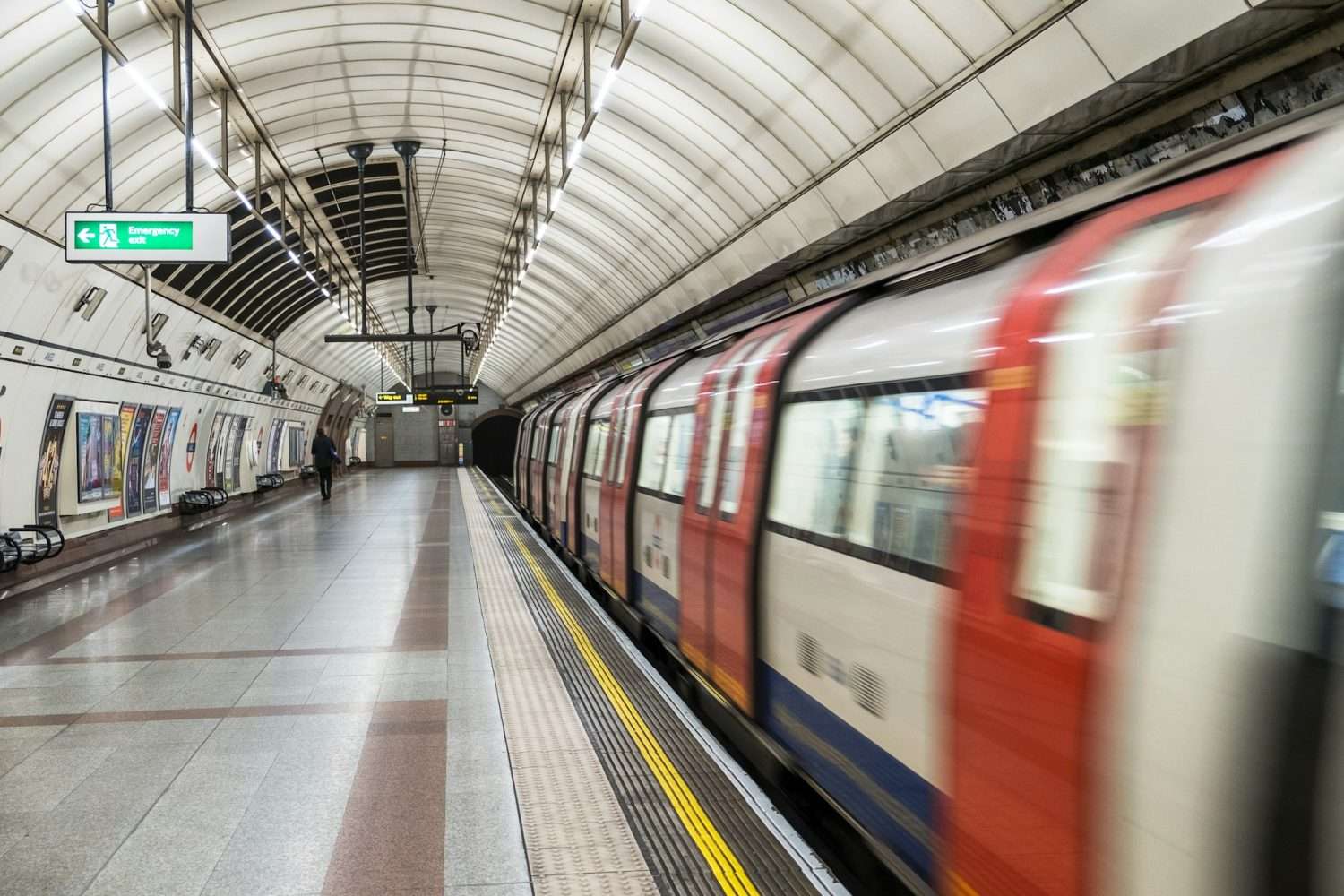
The London commuter belt is the area around Greater London from which people regularly travel into the capital for work.
It has no official boundary or definitive list of towns. Its reach depends on transport connections, workplace location, journey time and how often someone needs to commute.
For property buyers, the London commuter belt opens up places outside Greater London while retaining access to the capital. A suitable location should balance the property, housing costs, travel expenses and complete door-to-door journey.
Some commuter locations are close to London. Others are farther away but sit on direct rail routes. The commuter belt is therefore better understood as a network of connected towns than a fixed ring on a map.
How far does the commuter belt extend?
There is no official point at which the London commuter belt ends.
The Office for National Statistics explanation of Travel to Work Areas shows how commuting patterns can be used to study the relationship between where people live and work.
Travel to Work Areas help describe labour markets, but they are not property-search boundaries. The current areas are based on 2011 Census commuting patterns, while transport services and working arrangements have changed since then.
The practical reach of the commuter belt also differs between households. A longer journey may be manageable twice a week but unsuitable every weekday.
Where is the London commuter belt?
The commuter belt extends from London into parts of Berkshire, Buckinghamshire, Essex, Hampshire, Hertfordshire, Kent, Surrey, Sussex, Bedfordshire and Cambridgeshire.
These counties do not form a formal boundary. Some towns have direct services into London, while others require a change or provide fewer options in the evening and at weekends.
A practical property search should start with the part of London someone needs to reach. Buyers can then follow the relevant railway route out of the capital.
The London arrival station can be as important as the main train time. A route into Paddington may suit someone working in west or central London but be less convenient for a workplace on the other side of the capital.
Example commuter locations and property prices
There is no complete official list of London commuter towns. The following places are examples across different routes and property-price levels. They are not a ranking of the best, cheapest or fastest commuter locations.
The figures are provisional local-authority averages for all property types in July 2026. They do not represent the value of every home or neighbourhood within each area.
Luton, Bedfordshire
Luton is one location buyers may consider on the rail corridor north of London.
The provisional average house price across Luton local authority was £285,000 in July 2026. The average price paid by first-time buyers was £268,000.
Buyers should check current services, the route to the station and the complete journey to their workplace before choosing an area.
St Albans, Hertfordshire
St Albans is also on a northern rail corridor, but its local housing market differs considerably from Luton.
The provisional average house price across St Albans local authority was £647,000 in July 2026. The first-time buyer average was £475,000.
The difference between the Luton and St Albans figures shows why the commuter belt should not be treated as one property market. It does not show the price of comparable individual homes in each place.
Slough, Berkshire
Slough sits on the western Elizabeth line corridor.
The provisional average house price across Slough local authority was £336,000 in July 2026. The average price paid by first-time buyers was £304,000.
The official Elizabeth line route connects Slough with stations including Paddington, Bond Street, Tottenham Court Road, Farringdon, Liverpool Street, Whitechapel and Canary Wharf.
Services and stopping patterns can change, so buyers should check the current timetable for the days and times they expect to travel.
Reading, Berkshire
Reading is farther west on the Elizabeth line and is also served by National Rail.
The provisional average house price across Reading local authority was £350,000 in July 2026. The first-time buyer average was £308,000.
The Elizabeth line connects Reading with central London, but buyers should check the full timetable rather than assuming every service has the same stopping pattern or destination.
Dartford, Kent
Dartford is an example south-east of London.
The provisional average house price across Dartford local authority was £348,000 in July 2026. The average price paid by first-time buyers was £302,000.
Buyers should check which London stations are served at the times they expect to travel, along with evening, weekend and disruption options.
What do the property figures show?
The five provisional local-authority averages ranged from £285,000 in Luton to £647,000 in St Albans in July 2026.
This does not mean that Luton is the cheapest town in the entire commuter belt or that St Albans is the most expensive. The comparison covers only five examples, and local-authority averages are not individual property valuations.
Prices within the same council area can differ because of:
- Property type and size
- Condition
- Distance from the station
- Neighbourhood
- Parking
- Lease terms
- Service or estate charges
- Nearby development
Local housing estimates are based on fewer transactions than national figures, so short-term movements can be more variable. The latest figures are provisional and may be revised.
Buyers can use the UK House Price Index to examine wider price patterns and the HM Land Registry Price Paid Data search to investigate registered transactions by location and property type.
Compare the complete commute
A fast train into London does not always create a short commute.
Published journey times may cover only the main rail service. They can exclude travel to the station, waiting, changes and the final journey across London.
Compare:
- Travel from the property to the station
- The main rail journey
- Changes between services
- Onward travel in London
- The evening return journey
- Alternative routes during disruption
- Evening and weekend services
Test the commute when it will normally be made. A straightforward journey outside peak hours may feel different on a weekday morning.
The Transport for London journey planner can help assess onward journeys within the capital.
Calculate the full monthly cost
A home outside London is not automatically more affordable once travel and other household costs are included.
Compare:
- Mortgage payments or rent
- Rail fares
- London transport fares
- Station parking
- Local buses
- Fuel and vehicle costs
- Council Tax
- Service or estate charges
- Childcare affected by commuting hours
A lower purchase price may not create a lower monthly cost if two people commute regularly or the journey requires paid parking and onward travel.
Working arrangements can also change. Calculate the likely journey and cost under the current office policy and under a possible increase in commuting days.
The commuter belt and the Green Belt
The London commuter belt and London’s Green Belt are different.
The commuter belt is an informal area shaped by transport and employment. The Green Belt is a planning designation applied to land around built-up areas.
A commuter town may contain homes, stations, businesses and shops while also being close to Green Belt land.
Current government Green Belt guidance explains that identifying grey-belt land does not automatically mean it will be released from the Green Belt or approved for development.
Buyers concerned about future building should check the relevant council’s local plan, allocated development sites and planning application register. Nearby fields or open views should not be assumed to remain unchanged because they are described as countryside or Green Belt in property marketing.
What to check before choosing an area
Visit each shortlisted location more than once. Walk between the property, station and town centre, and test the journey during normal commuting hours.
Check:
- Current routes, fares and timetables
- Evening and weekend services
- Alternative routes during disruption
- Station parking and local buses
- Council Tax
- Broadband and mobile coverage
- Service or estate charges
- Local planning applications
- School admission arrangements
- Noise from roads, railways and airports
- Healthcare and everyday services
- Flood risk
The official GOV.UK long-term flood-risk service provides area-level information for England about risk from rivers and the sea, surface water, reservoirs and groundwater where information is available.
It does not predict whether an individual property will flood or cover every possible source of flooding. Further searches, insurance enquiries or specialist advice may be needed.
School admission arrangements should be checked with the relevant school and council. Living close to a school does not guarantee a place.
Is the London commuter belt right for you?
The commuter belt may suit buyers who want to retain access to London while considering homes outside Greater London.
It may work well for people with predictable working patterns, households looking for a different type of home and buyers who prefer living in a town outside the capital.
It may be less suitable for someone who travels into London every day, works unpredictable hours or needs to reach different parts of the city at short notice.
The right location is not necessarily the place with the fastest advertised train or lowest average property price. It is the one that offers a workable balance between the home, complete journey, total monthly cost and everyday needs.
Final thoughts
The London commuter belt has no fixed official boundary. It is a network of places connected to the capital through transport and employment.
Start with the London workplace or station you need to reach. Then compare possible locations using the complete journey, transport costs, housing costs and local services.
Official property figures can help compare broad areas, but they are not individual valuations. Completed sale prices, planning information and property-specific checks should form part of the wider research.
Important information
This article provides general information for people researching property around London. It is not legal, financial, mortgage, investment, valuation, surveying or conveyancing advice.
Property prices, transport services, fares, planning policies, flood information and school admission arrangements can change. Buyers should verify current details and seek advice from appropriately qualified professionals before making a financial or property decision.