
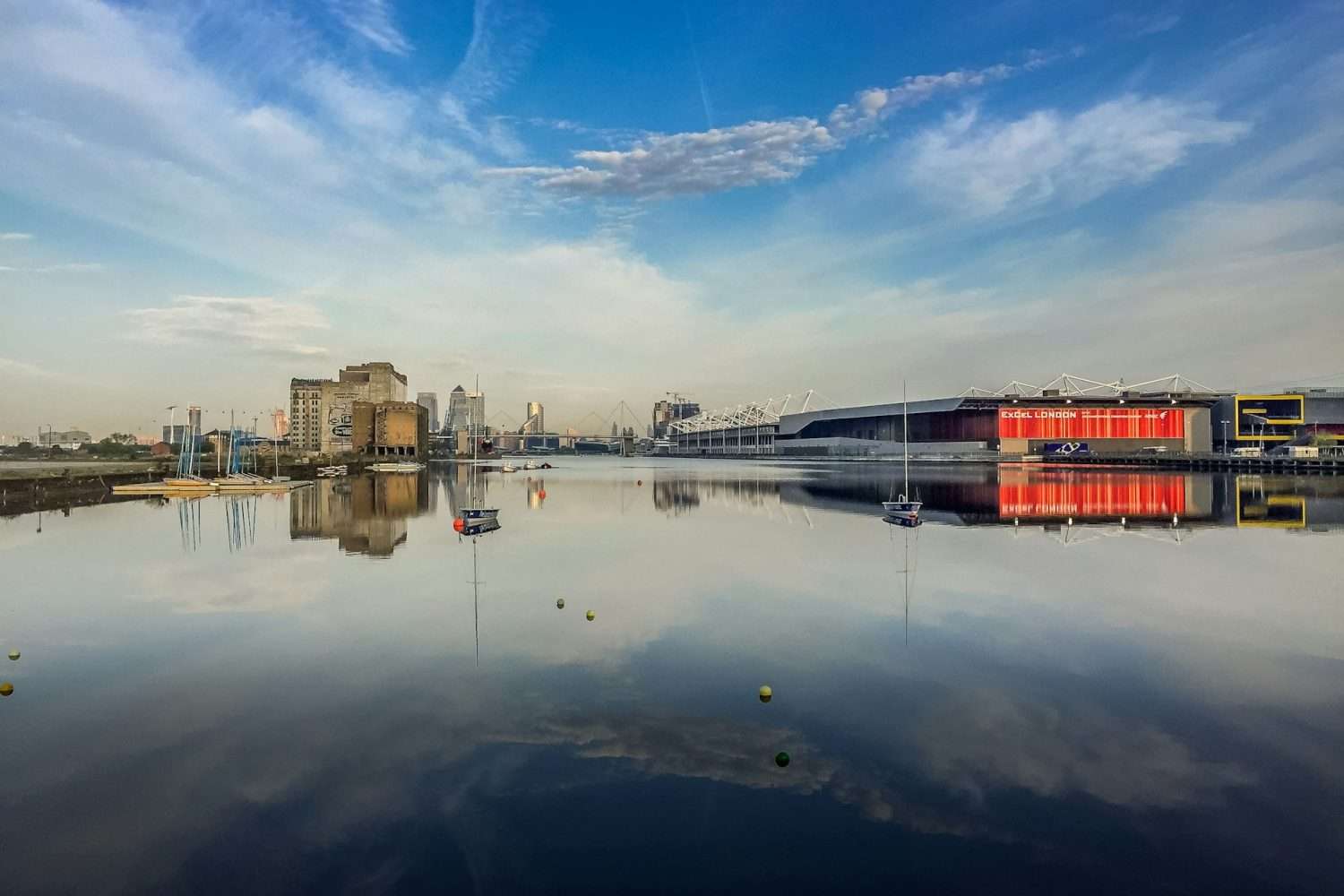
London Docklands covers a varied group of waterside neighbourhoods in east London. Around Canary Wharf, apartment buildings sit close to offices, shops and rail connections. Further south on the Isle of Dogs, buyers will find established residential streets, while the Royal Docks combine existing communities with large development areas.
London Docklands may suit buyers looking for modern homes, public transport connections and access to waterside or green spaces. The experience differs considerably between neighbourhoods, so compare the individual building, service charges, journey to the station, nearby facilities and local development before choosing a home.
Where is London Docklands?
London Docklands is a broad name for former dock and industrial districts beside the Thames. This guide focuses on two main areas:
- Canary Wharf and the Isle of Dogs in Tower Hamlets
- the Royal Docks and surrounding neighbourhoods in Newham
The Isle of Dogs includes Canary Wharf, South Quay, Millwall, Crossharbour, Mudchute, Cubitt Town and Island Gardens. Poplar and Blackwall sit immediately to the north, while Limehouse lies further west.
The Royal Docks consist of Royal Victoria Dock, Royal Albert Dock and King George V Dock. Nearby neighbourhoods include Custom House, West Silvertown, Pontoon Dock, North Woolwich and parts of Beckton.
Both areas continue to change. The Isle of Dogs Neighbourhood Plan applies to a designated area in the southern part of the Isle of Dogs, excluding Canary Wharf. It forms part of the development plan used by Tower Hamlets Council when assessing planning applications within that area.
In Newham, work on the North Woolwich and East Silvertown Strategic Regeneration Framework and Delivery Plan began in July 2025.
Development may bring new homes, public spaces and facilities, but building work and road changes can affect the surrounding area. Amenities shown in planning documents may not yet be open, and plans, funding and delivery dates can change.
Choosing a Docklands neighbourhood
Canary Wharf offers shops, rail connections and places to eat close to a major business district. Buyers searching in the immediate area will encounter many purpose-built apartment developments. Some buildings provide a concierge, gym, communal garden or residents’ lounge, with their upkeep usually contributing to the service charge.
For more detail about the commercial centre and its surroundings, read the Guinness Homes guide to living in Canary Wharf.
South Quay and Millwall place residents close to Canary Wharf but outside its main office streets. Apartment developments surround South Dock and Millwall Inner Dock, while local roads lead towards Millwall Park and residential parts of the peninsula.
Cubitt Town and Island Gardens include established residential streets, lower-rise housing and apartment developments. Residents can reach riverside paths, Island Gardens and the Greenwich Foot Tunnel, which provides a walking route beneath the Thames.
Poplar and Blackwall contain established housing, estates and newer apartment developments. Chrisp Street Market gives Poplar a local shopping centre, although redevelopment in the surrounding area means buyers should check which facilities are open. Housing, surroundings and access to services differ between individual streets.
Royal Victoria and Custom House combine dockside apartment developments with existing residential streets. Custom House has Elizabeth line and DLR services, while ExCeL London hosts exhibitions and other events. Homes close to the venue may experience greater footfall when large events are taking place.
Silvertown and North Woolwich contain established communities, industrial sites, newer housing and major development areas. Local features include London City Airport, Royal Victoria Gardens, North Woolwich Library and the Woolwich Ferry.
Published planning documents describe proposals for new homes, commercial premises and public spaces in parts of the Royal Docks. Planning approval does not guarantee that every part of a proposal will be completed as first described.
Homes and ownership costs
Purpose-built apartments are widely available across Canary Wharf, South Quay and parts of the Royal Docks. The wider area also includes converted industrial buildings, lower-rise blocks and houses in selected streets.
A modern development may include lifts, landscaped communal areas, a concierge, gym, workspace or residents’ lounge. These can be useful facilities, but buyers should account for their upkeep when reviewing the service charge.
The age of a building does not show whether it will cost less to run. A newer development may have higher charges because it provides more services, while an older block may require maintenance or planned work. Insulation, natural light, energy use and communal areas should be assessed for the individual property.
Homes may be available through outright leasehold sale or Shared Ownership. With Shared Ownership, eligible buyers purchase a share of a home and pay rent on the remaining share.
Depending on the property, other payments may include a service charge, estate charge, management fee or contribution to a reserve fund. The available share, eligibility criteria, rent, fees, repair responsibilities and lease terms vary. Check the property’s Key Information Documents before reserving.
Before committing to a purchase, consider obtaining independent advice from a solicitor or licensed conveyancer about:
- the remaining lease length
- current service charges and their recent history
- the reserve or sinking fund
- planned major works
- ground rent terms
- building insurance arrangements
- fire-safety and external-wall documents
- restrictions on pets, subletting or alterations
Service charges and the services they cover depend on the lease. Two properties with similar asking prices can have very different annual costs, so compare mortgage payments, rent where applicable, service charges, council tax and other housing expenses.
Transport and commuting
The DLR serves much of London Docklands. Stations on the Isle of Dogs include Canary Wharf, Heron Quays, South Quay, Crossharbour, Mudchute and Island Gardens.
Further east, the network serves Canning Town, Royal Victoria, Custom House, Prince Regent, Royal Albert, West Silvertown, Pontoon Dock, London City Airport and King George V.
Canary Wharf is served by the DLR, Jubilee line and Elizabeth line. Custom House has DLR and Elizabeth line services, while Canning Town connects the DLR with the Jubilee line.
The Greenwich Foot Tunnel provides a walking route beneath the Thames from Island Gardens. It gives residents in the southern Isle of Dogs another way to reach Greenwich town centre and onward transport connections.
Tunnel access and lift availability can change. Check the current foot tunnel and lift status before relying on the route.
Dockside geography can make a short map distance misleading. A route may require a footbridge, a walk around the water or a particular station entrance. Walk from the property to the station at the time you normally expect to travel.
Use TfL Journey Planner to check current services, accessibility and planned engineering work.
Schools and education
Schools serving the wider Docklands area include Canary Wharf College East Ferry, Canary Wharf College Glenworth, Cubitt Town Primary School, Seven Mills Primary School, Canary Wharf College Crossharbour and Royal Docks Academy. This is not a complete list.
Families can use the Tower Hamlets primary school directory to search for schools and review admissions information.
Those considering Custom House, Silvertown or North Woolwich can use Newham’s School Finder to identify nearby schools and review Newham school admissions information.
Living close to a school does not guarantee admission. Search using the full property address and check current admissions policies, inspection information and application dates. Nursery, childcare and post-16 provision may also influence which neighbourhood is practical for your household.
Shops, services and community facilities
Canary Wharf has shops, cafés and everyday services around its commercial centre. East Ferry Road serves residential parts of the Isle of Dogs, while Chrisp Street Market and its surrounding shops serve Poplar.
Facilities are more dispersed further east. Custom House, Beckton and North Woolwich have local centres, but the distance between a home and regularly used services varies by address.
Community facilities across Beckton and the Royal Docks include Beckton Globe Library, North Woolwich Library, Britannia Village Hall and Royal Wharf Community Dock.
Before considering a property, check the walking route to supermarkets, pharmacies, medical facilities and childcare. Being close to a station does not necessarily mean other services will also be nearby.
Parks and waterside walks
Millwall Park has football and cricket facilities, play areas, an outdoor gym, paths and seating. It connects with Mudchute Park and Farm and lies close to Island Gardens.
Mudchute Park and Farm provides open space, recreation, nature and educational activities on the Isle of Dogs. Together, these spaces give the southern part of the peninsula a different character from the office streets and apartment towers further north.
Island Gardens sits beside the Greenwich Foot Tunnel and looks across the Thames towards Greenwich. Sir John McDougall Gardens provides another riverside space closer to Canary Wharf.
The council’s Isle of Dogs walking routes pass West India Quay, Millwall Dock, Burrells Wharf, Cubitt Town and Island Gardens. They provide a useful way to explore the area beyond the route between a property and its nearest station.
In Newham, Thames Barrier Park and Royal Victoria Gardens provide larger green spaces. The Royal Docks Corridor, which opened in 2025, introduced footway and cycleway improvements, safer crossings, planting and new public spaces between Canning Town and Connaught Bridge.
Attractions, eating out and social life
London Museum Docklands at West India Quay explores the history of London’s river, port and people. The surrounding warehouses and dock structures show how older industrial buildings now sit beside offices, homes and public spaces.
Mudchute Park and Farm provides an outdoor destination on the Isle of Dogs. Greenwich is accessible through the foot tunnel from Island Gardens, placing its historic centre, park and riverside within reach of the southern peninsula.
ExCeL London hosts exhibitions and public events in the Royal Docks, while Brick Lane Music Hall is based in Silvertown. Check current programmes and access arrangements before visiting.
Canary Wharf and West India Quay contain many of the area’s places to eat and meet. Pubs, cafés and local businesses can also be found in neighbourhood centres elsewhere in Docklands.
Tower Hamlets Council’s walking routes identify The Gun, The Blacksmiths Arms and The Ledger Building around the Isle of Dogs and West India Quay. Check current opening hours, menus and access directly with each business before visiting.
Visiting your preferred area during the working week and at the weekend will give you a better impression of local activity, event footfall, noise and the choice of nearby places.
Checks to make before buying
Before making an offer:
- calculate mortgage payments, rent where applicable, service charges and council tax
- examine the lease and recent service-charge accounts
- review planned works and the building reserve fund
- check fire-safety and external-wall documents
- check the property for flood risks
- search the relevant council planning portal
- listen for aircraft, railway, road, construction and venue noise
- walk to stations, shops, schools and parks
- check broadband, mobile coverage, parking and cycle storage
- visit the surrounding streets at different times of day
Buyers considering a home in Newham can use the Newham planning register to search by address, postcode or planning reference.
The GOV.UK flood-risk service does not replace legal searches, insurance enquiries, a survey or specialist advice where these are needed.
Is London Docklands a good place to live?
London Docklands offers a choice between the commercial centre around Canary Wharf, established residential parts of the Isle of Dogs and changing neighbourhoods around the Royal Docks.
It may appeal to buyers looking for modern housing, public transport connections and access to water or green space. Possible drawbacks include higher service charges in some buildings, nearby construction, event activity, aircraft noise and indirect walking routes around the docks.
The Docklands name alone should not determine a property decision. The lease, annual running costs, building management, transport route and immediate surroundings will have a greater effect on daily life than the wider postcode.
Important information
This guide provides general information about living in London Docklands and was checked on 7 September 2026. Local facilities, transport services, school arrangements, planning proposals and businesses may change. Check current details with the relevant organisation before relying on them.
Property availability, eligibility criteria, prices, rents, service charges and other costs depend on the individual home and may change.
This guide is not legal, financial, mortgage, tax, investment or surveying advice. Consider obtaining independent advice from a solicitor or licensed conveyancer and, where needed, a suitably qualified mortgage adviser before committing to a purchase. You can check whether a mortgage firm or adviser is authorised and has the appropriate permissions through the Financial Services Register.
If you are considering Shared Ownership, read the property’s Key Information Documents and review the rent, service charge, lease terms, repair responsibilities and all other expected costs before reserving.


